Sunday, December 18, 2011

O Adonai

The second of the O Antiphons, O Adonai 
Latin:

O Adonai, et Dux domus Israel,
qui Moysi in igne flammae rubi apparuisti,
et ei in Sina legem dedisti:
veni ad redimendum nos in brachio extento.
English:

O Adonai, and leader of Israel,
you appeared to Moses in a burning bush
and you gave him the law on Sinai.
O come and save us with your mighty power.
In Isaiah we read:

"... but [He] judges the wretched with integrity, and with equity gives a verdict for the poor of the land. His word is a rod that strikes the ruthless, his sentences bring death to the wicked. Integrity is the loincloth round his waist, faithfulness the belt about his hips." (Isaiah 11:4-5)

"For the Lord is our judge, the Lord our lawgiver, the Lord our king and our saviour." (Isaiah 33:22)

Saturday, December 17, 2011

O Sapienta

The first of the O Antiphons. O Sapientia or O Wisdom.

In Latin:
O Sapientia, quae ex ore Altissimi prodiisti,
attingens a fine usque ad finem,
fortiter suaviterque disponens omnia:
veni ad docendum nos viam prudentiae.
In English:
O Wisdom, you come forth from the mouth of the Most High.
You fill the universe and hold all things together
in a strong yet gentle manner.
O come to teach us the way of truth.


In the prophecy of Isaiah we read:

"On him the spirit of the Lord rests, a spirit of wisdom and insight, a spirit of counsel and power, a spirit of knowledge and of the fear of the Lord." (Isaiah 11:2).

This prophecy is especially significant read with the Gospel of St John chapter 1, where we read in verses 1 - 3 "In the beginning was the Word: the Word was with God and the Word was God. He was with God in the beginning. Through him all things came to be, not one thing had its being but through him."

and in verse 14 "The Word was made flesh, he lived among us, and we saw his glory, the glory that is his as the only Son of the Father, full of grace and truth."

Isaiah's Lips Anointed with Fire

Friday, December 16, 2011

The O Antiphons

As we enter the last week of Advent we begin to use the great "O" antiphons at Evening Prayer. Over the next few days I'll be reproducing a post for each day that I wrote two years ago. Here is the first:


On 17 December we enter the Octave before Christmas and we use, at Vespers, the seven "O Antiphons". Each day until 24 December has a different one of the seven O Antiphons preceding the Magnificat.

Fr William Saunders at Catholic Education says
The exact origin of the O Antiphons is not known. Boethius (c. 480-524) made a slight reference to them, thereby suggesting their presence at that time. At the Benedictine abbey of Fleury (now Saint-Benoit-sur-Loire), these antiphons were recited by the abbot and other abbey leaders in descending rank, and then a gift was given to each member of the community. By the eighth century, they are in use in the liturgical celebrations in Rome. The usage of the “O Antiphons” was so prevalent in monasteries that the phrases, “Keep your O” and “The Great O Antiphons” were common parlance. One may thereby conclude that in some fashion the “O Antiphons” have been part of our liturgical tradition since the very early Church.

The "O Antiphons" are important for two reasons. Firstly, each antiphon highlights a title for the Messiah, and secondly each one refers to the prophecy of Isaiah telling of the coming of the Messiah.

I hope to post the O Antiphon of the day, in Latin and English, each day from 17 to 24 December. The Latin will be as per the Breviarium Romanum and the English as per the The Divine Office translation as approved for use in England (and most other English speaking countries bar the US). Quotations from scripture will be as appear in The Jerusalem Bible.

Thursday, November 10, 2011

Why I won't be wearing a poppy

I have two grandparents that fought in World War II and at least one great-grandfather that fought in WWI. I'm told that they, and their comrades, fought and died in those wars because they were opposed to fascism.
 
So why am I obliged to wear a poppy? Who are the Royal British Legion and their fascist supporters who insist that I wear their poppy?

Why am I viewed as some kind of screwball for pointing out that the history of the "British" Army is lined with the millions of corpses of British colonialism from Ireland and Scotland (nearly a century ago) to modern day Afghanistan and Iraq? 

Why should I wear the bloodstained poppy and support their poppy appeal when the money from their collection tins goes to line the pockets of the Bloody Sunday murderers?

Help for Heroes indeed!

Why should I accept that my children will be brainwashed at school into accepting their "Poppy Day" myth?

Their meaning of "hero" seems to be very different to mine and that difference seems to increase every year.

The jingoism that has accompanied the debate this week between FIFA and the English FA sums it up. In short, the poppy is a symbol of the collective acts of the British Army that would "shame all the devils in hell".


If you have to wear a poppy wear a white one.

After all, if Margaret Thatcher has expressed her "deep distaste" for the white poppy it must be the right thing to do!

Thursday, November 3, 2011

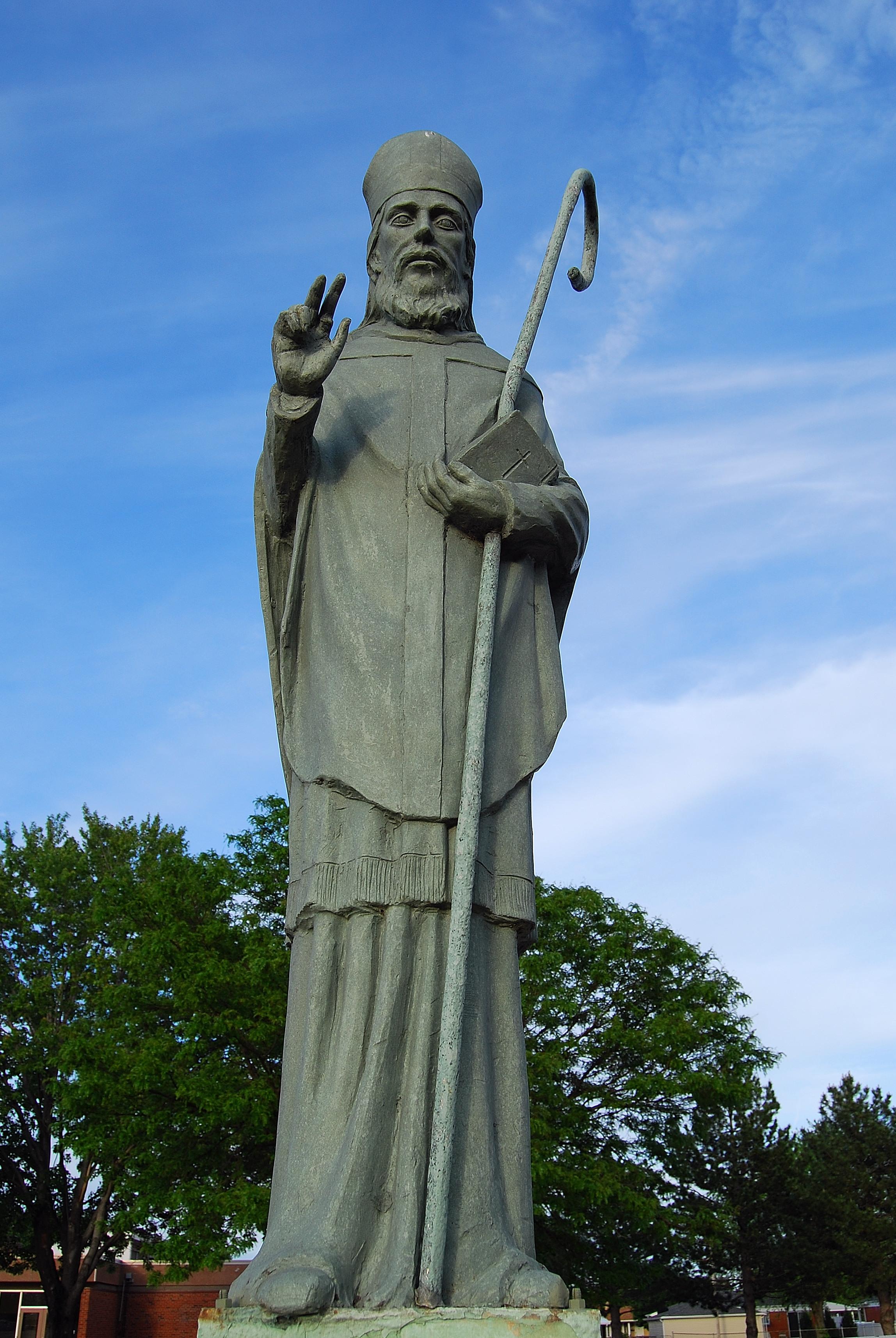
St Malachy

Today is the feast day of the saint after whom this blog is named - Malachy. So, from the archives of this blog:

St Malachy, who was he?

Malachy died on 2 November 1148 but his feast day is kept on 3 November to avoid a clash with All Souls Day.

source: Patricia Drury at http://en.wikipedia.org/wiki/St_Malachy
As an aside, it's also the feast day of St Martin de Porres

Monday, September 19, 2011

Of archbishops and stolen property

The T*blet of 17 September has an editorial about one Revd Nolbert Kunonga who has declared himself the Anglican "archbishop" of Harare and who has seized church property including the cathedral. The link is here. Caveat lector - reading The T*blet places one in spiritual danger.

I'm not sure I see the problem. Surely the good reverend is simply following a 450 year old Anglican tradition by seizing Church property and by awarding himself an ecclesial title?

I would have thought The T*blet would have approved. After all, that magazine is Anglican in all but name any way...

Thursday, September 15, 2011

Our Lady of Sorrows

At the cross her station keeping
stood the mournful Mother weeping,
close to Jesus to the last.

Through her heart, His sorrow sharing,
all His bitter anguish bearing
now at lenght the sword had passed.

Oh, how sad and sore distressed
was that Mother highly blessed,
of the sole-begotten One!
Christ above in torment hangs,
she beneath beholds the pangs
of her dying, glorious Son.

Is there one who would not weep,
'whelmed in miseries so deep,
Christ's dear Mother to behold?

Can the human heart refrain
from partaking in her pain,
in that Mother's pain untold?

Bruised, derided, cursed, defiled,
she beheld her tender Child
All with scourges rent.

For the sins of His own nation,
saw Him hang in desolation,
Till His spirit forth He sent.

O sweet Mother! fount of love!
Touch my spirit from above,
make my heart with thine accord.

Make me feel as thou hast felt;
make my soul to glow and melt
with the love of Christ, my Lord.

Holy Mother! pierce me through,
in my heart each wound renew
of my Savior crucified.

Let me share with thee His pain,
who for all our sins was slain,
who for me in torments died.

Let me mingle tears with thee,
mourning Him who mourned for me,
all the days that I may live.

By the Cross with thee to stay,
there with thee to weep and pray,
is all I ask of thee to give.

Virgin of all virgins blest!,
Listen to my fond request:
let me share thy grief divine;

Let me, to my latest breath,
in my body bear the death
of that dying Son of thine.

Wounded with His every wound,
steep my soul till it hath swooned,
in His very Blood away;

Be to me, O Virgin, nigh,
lest in flames I burn and die,
in His awful Judgment Day.

Christ, when Thou shalt call me hence,
by Thy Mother my defense,
by Thy Cross my victory;

While my body here decays,
may my soul Thy goodness praise,
safe in paradise with Thee.
Amen.

Thursday, September 8, 2011

What kind of Catholic are you?

A bit of a fun quiz. What kind of Catholic are you? I'm:

You Are a Daily Rosary (Very Traditional) Catholic
You'd like the church to revive the time-honored devotions, liturgical practices, and strong institutional discipline that prevailed before the Second Vatican Council—and you're hoping that Pope Benedict XVI will lead the church in exactly that direction. Your favorite hymn is probably a traditional Latin composition such as the "Panis Angelicus," and your favorite pope is probably a pioneer of the Church's great liturgical tradition such as Gregory the Great.

Take the quiz by clicking here

PS: this is my first post from an iPad. Not altogether a simple task!

Friday, September 2, 2011

The new English translation: day 2


Thursday, September 1, 2011

The new English translation: day 1

Nada, nothing, zilch, zip.

Same old, same old lame duck 1973 ICEL version.

How disappointing.