Showing posts with label feast. Show all posts

Thursday, November 3, 2011

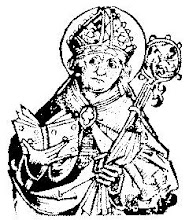
St Malachy

Today is the feast day of the saint after whom this blog is named - Malachy. So, from the archives of this blog:

St Malachy, who was he?

Malachy died on 2 November 1148 but his feast day is kept on 3 November to avoid a clash with All Souls Day.

source: Patricia Drury at http://en.wikipedia.org/wiki/St_Malachy
As an aside, it's also the feast day of St Martin de Porres

Tuesday, March 1, 2011

Dewi sant hapus I chi

Happy St David's day.

The Divine Office note for St David says:
Born probably in Cardigan about the year 520, he received his early training from St Illtyd. He attraced many postulants to the monastries he founded, all of which were remarkable for the austerity of their rule of life. Consecrated bishop, according to his biographer, in Jerusalem, he was recognised as primate of Wales and established his see at Mynyw (Menevia), at the monastry of which he was abbott and where he died about the year 588. He is the principal patron of Wales

Tuesday, November 9, 2010

The Dedication of the Lateran Basilica

The Lateran Basilica, or more properly the Archbasilica of the Most Holy Saviour and Sts. John the Baptist and the Evangelist at the Lateran is the seat of the Bishop of Rome, that is, the cathedral church of Rome. This surprises many people who assume that the cathedral of Rome is St Peter's Basilica.

9 November is the feast day of St John Lateran, and it's an important feast day for all Catholics as St John Lateran is our mother church - the highest "rankintg" church in all Christendom.

Happy feastday!

Thursday, October 28, 2010

Saint Simon and Saint Jude

28 October is the deast day of two of the apostles, Saints Simon and Jude.


The introductory note for todays Divine Office entry reads:
The name of Simon is placed eleventh in the list of apostles and nothing is known of him except that he was born at Cana and was known as the Zealot.
Jude, also known as Thaddeus, was the apostle who, at the Last Supper, asked the Lord why he showed himself only to his disciples and not to the world (John 14:22)
Saint Simon - pray for us
Saint Jude - pray for us

Monday, September 13, 2010

Golden Mouth


Today is the feast day of St John Chrysostom, Bishop and Doctor of the Church. The introductory note in the Divine Office says:
Born at Antioch about the year 439. After a brilliant course of studies he began to lead a life of austerity. He was ordained priest and laboured in preaching, with great fruit. In 397 he became Bishop of Constantinople and showed himself a true pastor, striving to reform the morals of both clergy and people. He incurred the hatred of the imperial court and his work was undermined because of jealousy, and twice he was sent into exile. Overcome by exhaustion he died at Comana in Pontus on 14 September 407. Because of his sermons and writings to explain the faith and to encourage the practice of Christian life he was called John of the Golden Mouth.
Under the old calender, his feast day was 27 January.

Saturday, August 28, 2010

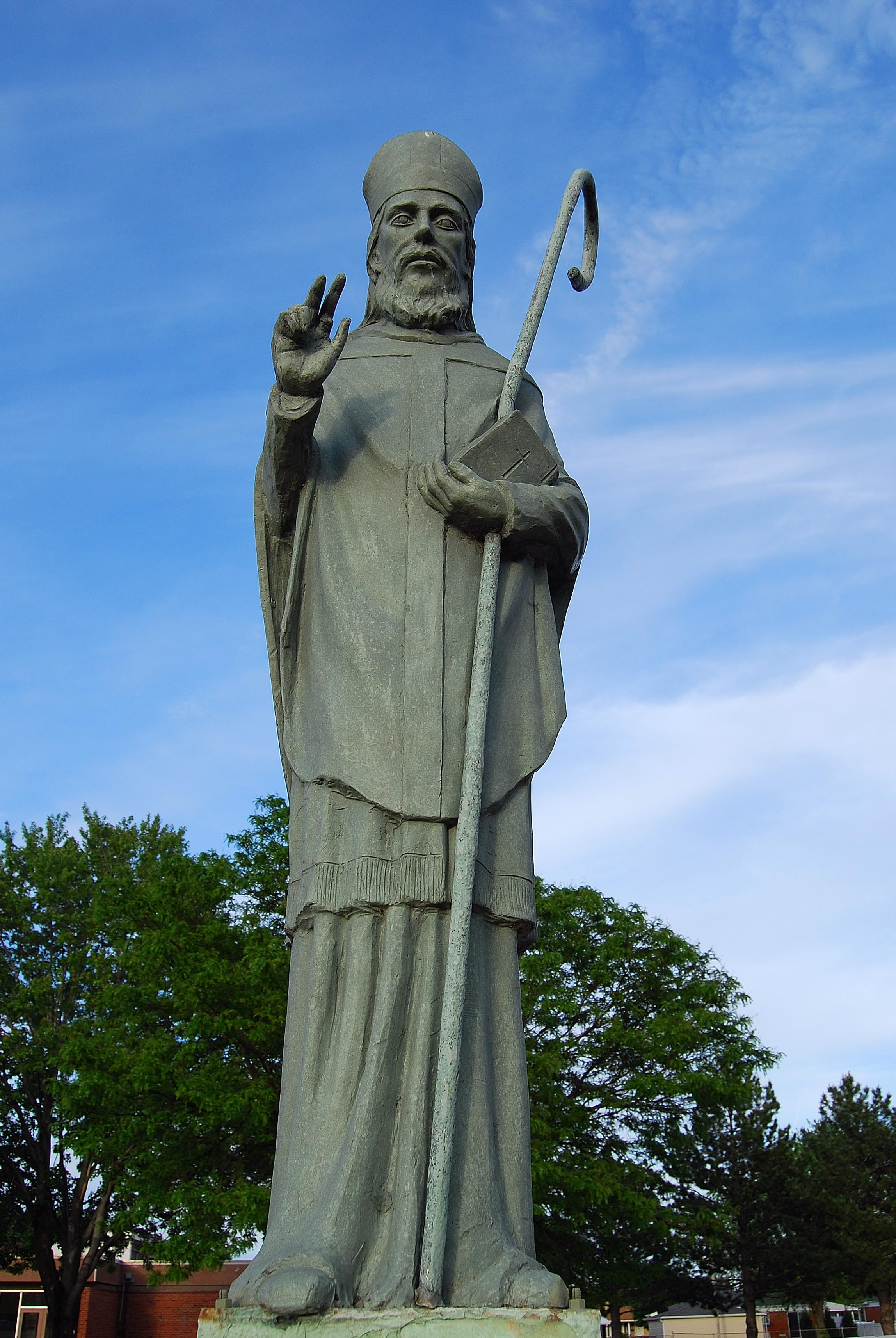
St Augustine, Bishop and Doctor of the Church

Yesterday we had the feast day of St Monica. Today we celebrate the feast of her son, St Augustine of Hippo, Bishop and Doctor of the Church.

The life of Augustine is well documented. He was born at Thagaste, in present day Algeria, in 354 and raised as a Christian by his mother but left the Church as young man, becoming first a Manichaean, then a Neoplatonist. He took a concubine (whom he later abandoned for an arranged marriage - which never took place) and fathered a son, Adeodatus. After a distinguished academic career at Carthage, Rome and Milan, he was drawn back to Christianity and was baptised in 387.

Returning to Africa, he sold his possessions and gave the money to the poor. He was ordained to the priesthood in 391 and made coadjutator Bishop of Hippo in 395, becoming Bishop in 396, a position he held until his death 34 years later in 430.

Augustine was a prolific writer, including copious apologetic works and texts on doctrine and against the various heresies of his day. His best known work is certainly his Confessions.

As an aside, Thagaste remains a titular see today, with Archbishop Ivo Scapolo, the Apostolic Nuncio to Rwanda, the current holder of the see.
Tuesday, August 10, 2010

St Laurence, Deacon and Martyr

Saint Laurence was one of the seven deacons martyred during the persecution of the Emperor Valerian in 258. 10 August is his feast day. The breviary entry about him says:

Laurence was one of the seven deacons of the Church of Rome and was executed on 10th August 258, four days after Sixtus II and his companions. By now, few of the facts of his life are known for certain: he was probably a Spaniard from Toledo.

A basilica was built over Laurence’s tomb fifty years after his death, by the Emperor Constantine, and the anniversary of his martyrdom was kept as a solemn feast – with considerably more solemnity than that of Pope Sixtus II (we do not know why). By the sixth century, it was one of the most important feasts throughout much of western Christendom. His name occurs (with Sixtus’s) in the Roman Canon of the Mass.

Tuesday, June 22, 2010

Ss John Fisher and Thomas More

Today is the feast day of Saints John Fisher and Thomas More, martyred in the fallout over Henry VIII's desirre for a divorce from Catherine of Aragon.

St John Fisher was Bishop of Rochester and Chancellor of Cambridge University. He was created a cardinal while awaiting execution and remains the only member of the College of Cardinals to suffer martyrdom.

St Thomas More was a lawyer and Lord Chancellor of England.

Ultimately, both men were executed as a result of their obedience to the Pope, and their refusal to acknowledge Henry as head of the Church in England.

On a note of enormous irony both men are recognised as saints by the Anglican Church.

Friday, March 19, 2010

St Joseph, foster-father of our Lord


We don’t really know much about St Joseph because the Gospels don’t tell us much of the life of Jesus after childhood and before the beginning of his public ministry. We do know that his home town was Bethlehem but by the time of the Annunciation he was living in Nazareth.

We know too that because of the census decreed by Caesar Augustus, St Joseph took his pregnant wife, the Blessed Virgin Mary, to Bethlehem where the Saviour was born and laid in a manger. St Matthew (2:13) tells us that an angel appeared to St Joseph warning him to flee with his family to Egypt which he did in time to avoid Herod’s murder of the Holy Innocents in Bethlehem and surrounding area.

It is clear that after some years in Egypt, the Holy Family travelled back to Nazareth and we can surmise that Jesus was taught the craft of St Joseph the Carpenter. The only other significant mention of St Joseph in the Gospels is the "loss" of Jesus in the temple in Jerusalem when Jesus was 12 years old.

We know nothing of the death of St Joseph but it is safe to assume that he died before Christ began his public life; else it’s inevitable he would have been mentioned again in the Gospels. It’s quite probable he died and was buried in Nazareth.

Thursday, March 18, 2010

St Cyril of Jerusalem

Today is the memorial of St Cyril of Jerusalem, Bishop and Doctor of the Church.


The breviary note says about him:
Born of Christian parents in the year 315. He succeeded Maximus as Bishop of Jerusalem in 348. He was involved in the Arian controversy and more than once was sentenced to exile. His Catecheses in which he explained the true doctrine of the faith and Sacred Scripture as well as the tradition of the Church for the sake of the people show his pastoral zeal. He died in the year 386.

His Catholic Encyclopedia entry is here.

Wednesday, March 17, 2010

Hail glorious St Patrick

Hail, glorious St. Patrick, dear saint of our isle,
On us thy poor children bestow a sweet smile;
And now thou art high in the mansions above,
On Erin's green valleys look down in thy love.

I suspect there are not many people in the western world who do not know that today, 17 March, is St Patrick's day. For most "Paddy's day" is nothing more than another Hallmark Holiday and a chance to go on the lash wearing a ridiculous hat and leprechaun wig. Few recall that this is a Church feast day celebrating the life of a significant early bishop and missionary.

The public perception of St Patrick's day should serve as a warning of what lies in store for Christmas in the increasing hostile secular society.

Having been Mr Misery Guts - Happy St Patricks day!

Tuesday, March 9, 2010

St Frances of Rome

9 March is the memmorial of St Frances of Rome. The breviary entry says about her:

"Born in Rome in the year 1384. She was married when very young and gave birth to three children. She lived in troubled times and gave her goods to the poor and tended the sick. She was outstanding in virtue especially in humility, patience and devotion to the needy. In the year 1425 she founded a Congregation of Oblates following the rule of Saint Benedict and died in 1440."


In the life of Saint Frances of Rome, Lord
You gave us an outstanding example
of the married state and of the religious life.
Grant that we may discern your presence
in all the circumstances of our lives,
and follow you to the end of our days.

Monday, March 8, 2010

St John of God


St John of God was born in Portugal on 8 March 1495. He served in the army in Spain under Emperor Charles V before becoming a friar and dedicating the remainder of his life to the poor and sick.

He founded a hospital in Grenada and is probably best known as founder of the Order of Hospitallers aka Brothers Hospitallers of St John of God.

St John of God died on his 55th birthday on 8 March 1550 and was canonised by Pope Alexander VIII in 1690. He is the patron saint of hospitals, the sick, nurses, fire fighters, alcoholics and booksellers.

Thursday, March 4, 2010

Saint Casimir, patron of Lithuania, Poland and the young


Today is the feast day of St Casimir.

The breviary says about him: "Born in the year 1458, the son of the King of Poland. He practiced the Christian virtues especially chastity and love of the poor. He was conspicuous for a firm faith and for his veneration for the Holy Eucharist and the Blessed Virgin Mary. He died of phthisis in the year 1484."

St Casimir was canonised by Pope Adrian VI in 1522.

Monday, March 1, 2010

St David

St David is not a saint who appears in the General Calendar. He is, however, the patron saint of Wales and so today, 1 March, is a feast in England and a solemnity in Wales.

Very little is known for certain about Saint David. He was probably born in Cardigan circa 520. He was a bishop and primate of Wales and died around 588. He was renowned as a preacher and founded monasteries and churches all over Wales.

Unlike  the patron saints of the other nations making up the British Isles (Andrew, Patrick and George) David was actually born in the country of which he is patron.

He was canonized by Pope Callistus II in 1123.

Tuesday, February 23, 2010

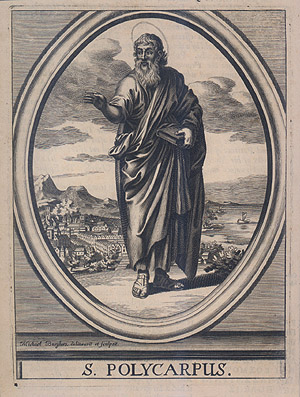
St Polycarp, Bishop and Martyr


23 February is the memorial of St Polycarp, Bishop of Smyrna and Martyr.

The Breviary says about him: Polycarp was a disciple of the apostles and bishop of Smyrna, as well as a friend of St Ignatius of Antioch. He went to Rome to confer with Pope Anicetus about the celebration of Easter. He suffered martyrdom about the year 155 by being burnt to death in the city stadium.

Monday, February 22, 2010

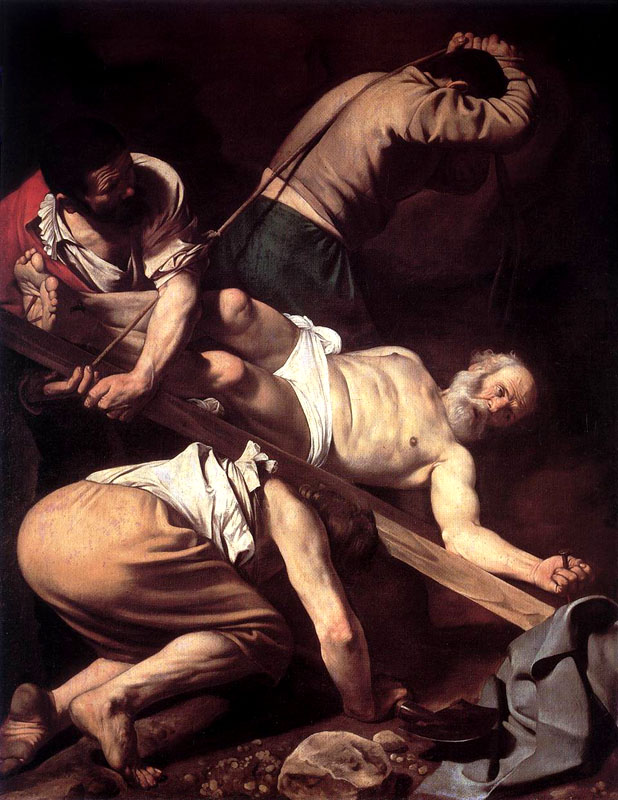
The See of St Peter the Apostle

The 22nd of February is the feast of the See of St Peter.

According to the note in the Breviary: "The feast of the See of Saint Peter has been kept at Rome on this day from the fourth century as a symbol of the unity of the church founded on the Apostle Saint Peter."

The Lord said to Peter: "To you I give the keys of the kingdom of heaven. Whatever you bind on earth will be bound in heaven; whatever you loose on earth will be loosed in heaven" (Matthew 16: 18-19)

Wednesday, February 10, 2010

St Scholastica

10 February is the memorial of St Scholastica. The breviary says about her:

The sister of St Benedict,  born at Norcia in Umbria about the year 480. Together with her brother she consecrated herself to God, and she followed Benedict to Monte Casino, where she died about the year 547.

Saturday, February 6, 2010

Patronal feast day

Today is one of the two patronal feast days of our parish church, Our Lady of the Annunciation and the Martyrs of Japan.

St Paul Miki and his 25 companions were martyred, by crucifixion, in Nagasaki on 5 February 1597.  Of the 26, six were European Franciscan missionaries, three (including St Paul Miki) were Japanese Jesuits and the remaining 17 were Japanese laymen. Three were children, or at least young boys.

The Japanese Martyrs were added to the General Calendar in 1969.

Tuesday, January 26, 2010

Saint Timothy and Saint Titus

Saints Timothy and Titus where early bishops and today is their memorial.

The breviary says: Timothy and Titus were disciples and helpers of the apostle Paul, the former being placed in charge of the Church at Epheus, the latter the Church at Crete. Saint Paul wrote his pastoral epistles to them, containing much useful advice for the instruction of the clergy and people.